



As cryptocurrency adoption grows, privacy remains a core concern for traders seeking to maintain anonymity in their transactions. No KYC crypto exchanges allow users to trade digital assets without submitting personal identification documents, aligning with the decentralized ethos of blockchain.
In 2025, these platforms are gaining traction for their speed, accessibility, and discretion, despite increasing regulatory scrutiny.
We focus on CoinEx, Bybit, dYdX, MEXC, Uniswap, SimpleSwap, ProBit, Pionex, Changelly, and TradeOgre, evaluating their features, fees, security, and user experience, with considerations for USA users. Our goal is to provide accurate, actionable insights for privacy-conscious traders.
What Is KYC in Crypto?
Know Your Customer (KYC) is a regulatory process used by financial institutions, including crypto exchanges, to verify user identities. In crypto, KYC typically involves submitting personal details like name, address, date of birth, government-issued ID (e.g., passport, driver’s license), and sometimes proof of address or selfies.
Mandated by bodies like the Financial Action Task Force (FATF), KYC aims to curb money laundering, fraud, and terrorist financing. Centralized exchanges enforce it for legal compliance, but it delays onboarding, raises privacy concerns, and risks data breaches. No KYC exchanges bypass this with wallet connections or minimal registration, appealing to users prioritizing anonymity in a surveilled digital economy.
Top 10 No KYC Crypto Exchanges 2025
Below, we provide detailed profiles of the top 10 No KYC crypto exchanges for 2025, selected based on their user feedback. Each review covers KYC policies, features, supported cryptocurrencies, fees, promotions, security, user experience, and unique aspects, with specific notes on USA accessibility and potential risks like VPN usage.
1. MEXC
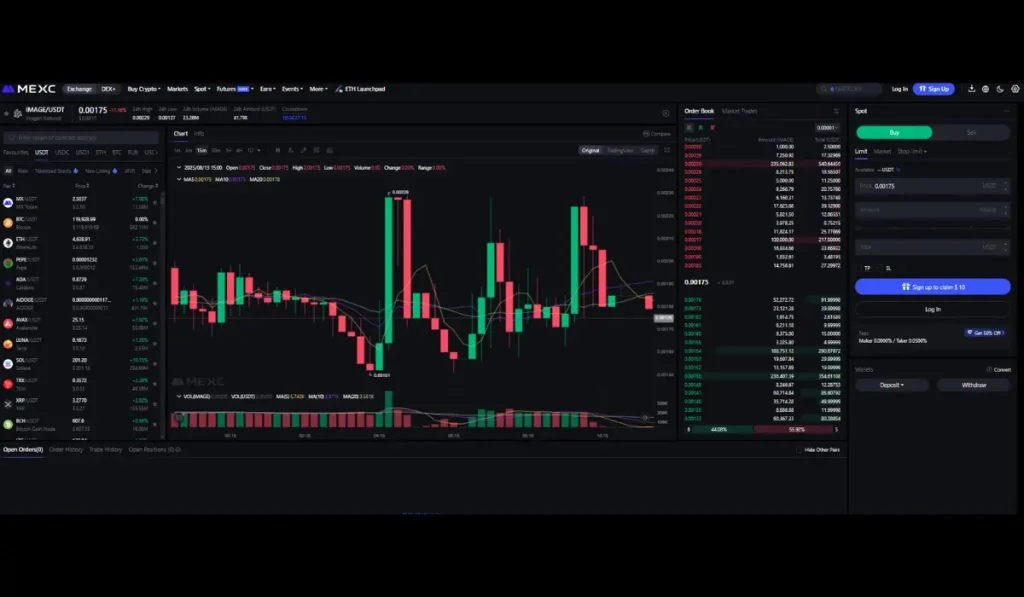
MEXC, established in 2018 and based in Seychelles, is a leading global crypto exchange that does not enforce mandatory KYC for initial trading, making it a top choice for privacy-focused users. The platform operates a tiered account system: unverified, primary KYC, and verified plus. Unverified users enjoy a generous withdrawal limit of up to 10 BTC every 24 hours, one of the highest among no KYC exchanges. However, recent user reports indicate that MEXC may request verification for high withdrawals or suspicious activity, and policies can shift without prior notice. In some regions, unverified accounts face a 1,000 USDT trading limit, and withdrawals may be paused until KYC is completed. For USA users, MEXC has been unavailable since late 2023 due to regulatory restrictions; attempting to access it via a VPN violates terms of service, risking account suspension and potential fund lockouts. MEXC boasts over 1,600 cryptocurrencies, including major coins like BTC, ETH, and USDT, as well as niche altcoins. It offers spot trading, futures with up to 200x leverage, leveraged ETFs, staking, copy trading, and crypto savings products. Trading fees are among the lowest, with 0% maker and 0.05% taker fees for spot trading, further reduced for MX token holders. The platform also provides launchpad airdrops and bonuses up to $20,000 for new users. Security is robust, with 98% of assets in cold storage, multi-signature wallets, 2FA, and regular proof-of-reserves audits, with no major breaches reported. The user interface is intuitive, with high-speed trading (1.4 million transactions per second) and mobile apps for iOS/Android, supported by 24/7 live chat and email. MEXC’s extensive altcoin selection, low fees, and high withdrawal limits make it ideal for traders seeking variety and anonymity, though USA users and those trading large volumes should exercise caution due to potential KYC prompts.
2. CoinEx
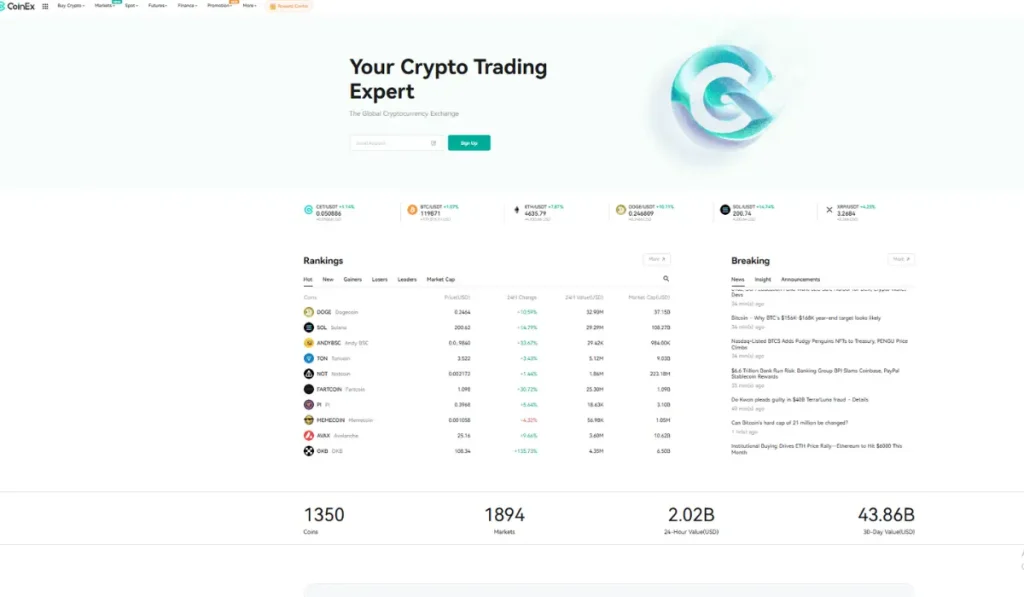
CoinEx, founded in 2017 in Hong Kong, is a centralized exchange that skips mandatory KYC for basic trading, offering unverified users a withdrawal limit of $10,000 per day or $50,000 per month. However, trading privacy coins like Monero or engaging in suspicious activity may trigger verification requests, and KYC policies can change abruptly. USA users have been barred from new registrations since a 2023 regulatory settlement, particularly after a New York ban; existing users often use VPNs, but this risks account bans and frozen funds. CoinEx supports over 600 cryptocurrencies, including BTC, ETH, USDT, and a wide range of altcoins, with features like spot trading, margin trading, futures with up to 100x leverage, staking, and earn products. Trading fees are competitive at 0.2% for spot (reducible to 0.1% with CET tokens) and 0.02% maker/0.05% taker for futures. Promotions include airdrops and 40% referral commissions. Security measures include cold storage for 98% of assets, multi-signature wallets, SSL encryption, and 2FA, with no major hacks and regular proof-of-reserves audits. The platform’s mobile and web apps are beginner-friendly, with 24/7 support via chat and email. CoinEx stands out for its balance of accessibility, altcoin support, and high unverified withdrawal limits, making it suitable for small-to-medium traders, though privacy coin restrictions and USA bans limit its appeal for some.
3. dYdX
dYdX, launched in 2017, is a hybrid decentralized exchange (DEX) operating on Ethereum and Cosmos, requiring no KYC and enabling permissionless trading via wallet connections (e.g., MetaMask, Trust Wallet). Unverified users face no withdrawal limits, as funds remain in personal wallets, but USA and Canadian users are officially restricted due to regulatory compliance. Using a VPN risks wallet blacklisting on integrated protocols. dYdX supports over 35 cryptocurrencies, including BTC, ETH, and SOL, across chains like Ethereum, Base, and Arbitrum, offering perpetual contract trading with up to 50x leverage. Fees are low, with taker fees at 2.5-5 bps and maker fees at -1.1 to 1 bps, incentivizing liquidity provision. Promotions include monthly surge rewards and trading incentives. As a non-custodial platform, security relies on audited smart contracts, with a total value locked (TVL) exceeding $12 million, ensuring deep liquidity. The interface is pro-focused, supporting mobile, desktop, and API access, though it may be complex for beginners. dYdX excels for advanced DeFi traders seeking high leverage and anonymity, with community-driven rewards enhancing its appeal, but USA restrictions and technical complexity may deter some users.
4. Bybit
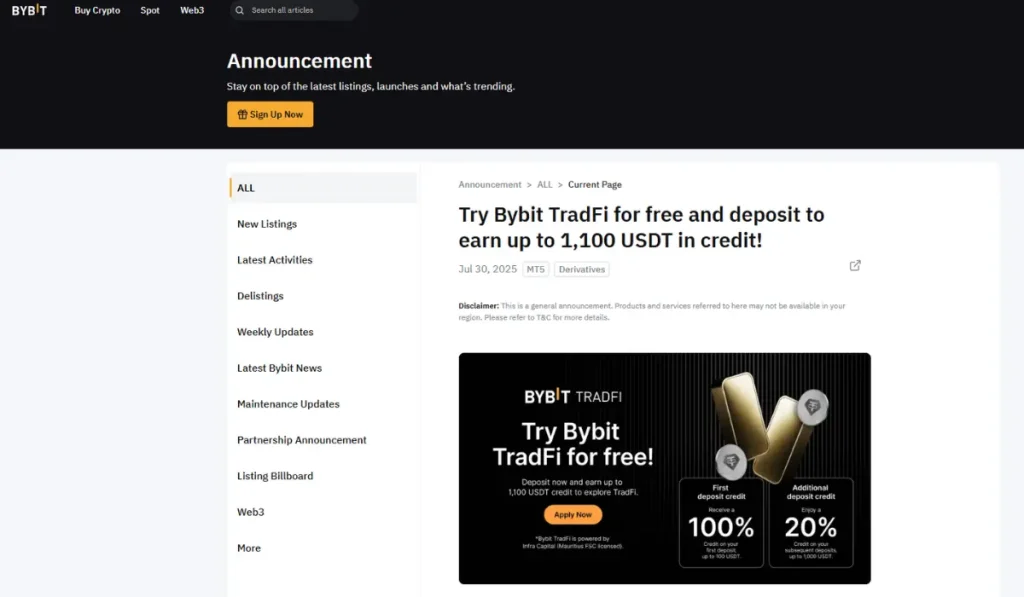
Bybit, established in 2018 in Singapore, is a global derivatives leader that does not require KYC for basic trading, allowing unverified users to withdraw up to 20,000 USDT daily. However, fiat deposits, staking, and high withdrawals may trigger verification, and Bybit reserves the right to request KYC at any time. USA users are restricted due to regulatory pressures; VPN use risks account suspension and fund lockouts. Bybit supports over 400 cryptocurrencies, including BTC, ETH, SOL, and NFTs, with features like spot trading, futures, options (100x leverage), staking, launchpad, and trading bots. Spot fees are 0.1%, while futures fees are 0.02% maker/0.055% taker, with no deposit fees and minimal withdrawal fees. Promotions include welcome bonuses up to $30,000, referral rewards, and trading competitions. Security is robust, with cold wallets, multi-signature systems, an insurance fund, and 2FA, backed by no reported hacks and regular audits. The platform offers sleek mobile and web apps with advanced charting and 24/7 multilingual support. Bybit’s copy trading and automated bots make it ideal for high-leverage traders seeking anonymity, though USA restrictions and potential KYC prompts require caution.
5. PrimeXBT
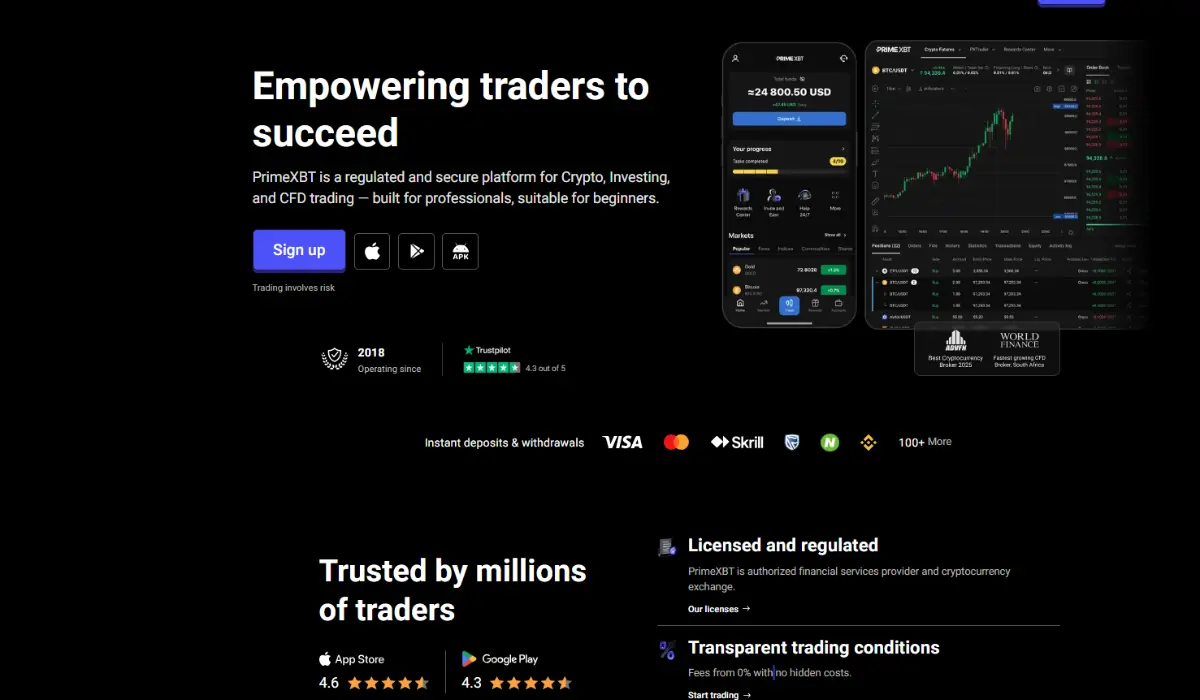
PrimeXBT, launched in 2018, does not mandate KYC by default, allowing unverified users to trade and withdraw up to $20,000 daily and deposit up to $2,000. Customer Due Diligence may be requested for suspicious activity, pausing withdrawals until verified. USA users are restricted; VPN use violates terms, risking bans. PrimeXBT supports a smaller crypto selection (BTC, ETH, LTC, XRP, EOS) but offers trading in forex, commodities, CFDs, and stock indices. Fees are competitive, ranging from 0.01-0.05% for crypto trades, with no major promotions noted. Security includes cold storage, 2FA, and a clean track record with no breaches. The platform is user-friendly, with mobile and web access and 24/7 support. PrimeXBT’s unique multi-asset trading appeals to users diversifying portfolios anonymously, but its limited crypto selection and USA restrictions are drawbacks.
6. Bisq
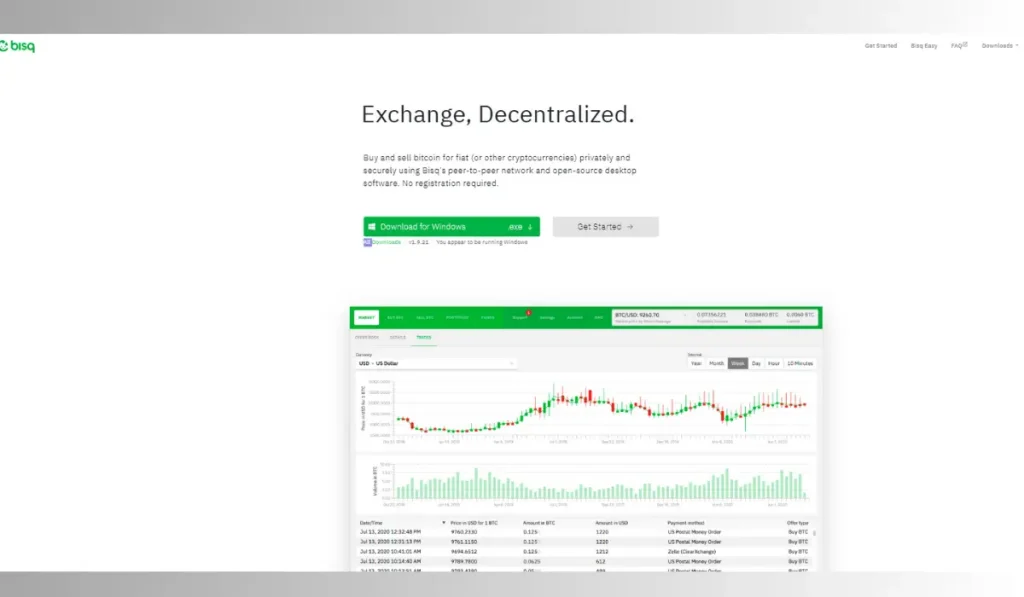
Bisq, a fully decentralized P2P exchange, is staunchly anti-KYC, requiring no registration or personal data. Trades are conducted via Tor and multi-signature escrow, with no regional restrictions, including the USA. Bisq supports 30+ cryptocurrencies, primarily Bitcoin, for P2P trading. Fees are 0.65% per trade, higher than most, with no bonuses. Security is non-custodial, relying on Tor and open-source software, with no central server vulnerabilities. New accounts face low trade limits (0.002 BTC to buy, 0.0624 BTC to sell), increasing with SEPA payment signing. The interface is complex, suited for advanced users comfortable with P2P mechanics. Bisq’s true decentralization and privacy focus make it ideal for purists, but its learning curve and low liquidity limit broader appeal.
7. Hodl Hodl

Hodl Hodl is a non-custodial P2P Bitcoin platform requiring no KYC, using multi-signature escrow for secure trades. There are no withdrawal limits, but trade volume is capped per contract. It’s globally accessible, including the USA. Supporting only Bitcoin, it focuses on direct peer-to-peer trading. Fees vary by trade, with no major promotions. Security is non-custodial, with funds locked in escrow and no data storage. The interface is simple, with a reputation system to build trust. Hodl Hodl’s minimal interference and Bitcoin focus appeal to privacy-conscious traders, though its single-currency limitation reduces versatility.
8. Uniswap
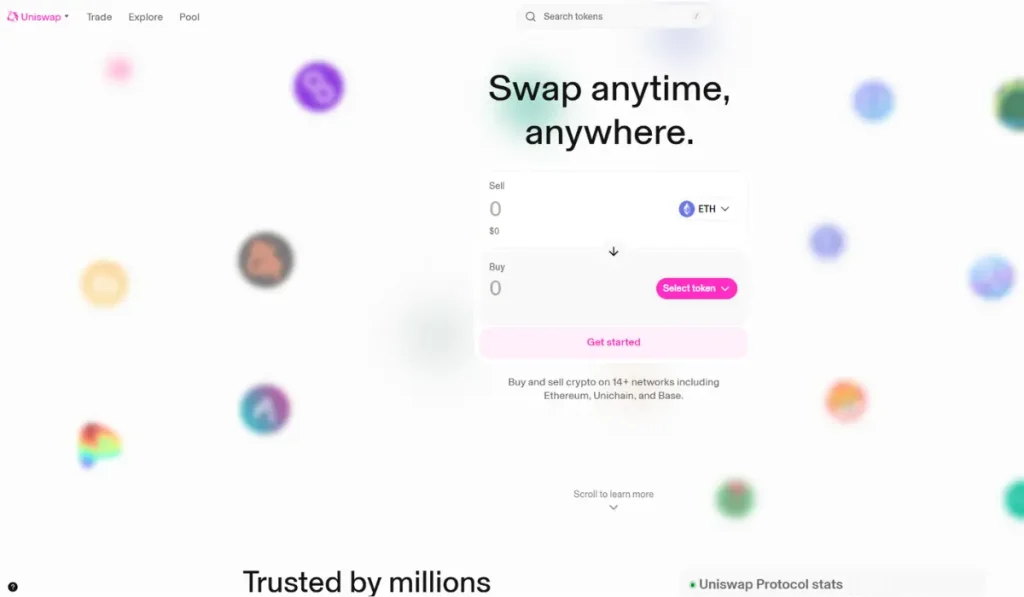
Uniswap, the largest Ethereum DEX since 2018, requires no KYC, enabling permissionless ERC-20 token swaps via wallet connections (e.g., MetaMask). With no withdrawal limits and global accessibility, including the USA, it’s a top choice for DeFi enthusiasts. Uniswap supports 900+ ERC-20 tokens and offers liquidity pools and staking. Swap fees are 0.3%, paid to liquidity providers, with no bonuses. Security is non-custodial, backed by audited smart contracts and a $4 billion+ TVL. The interface is simple, mobile-friendly via wallets, and beginner-accessible. Uniswap’s vast token support and full decentralization make it a leader, though high Ethereum gas fees can be a barrier.
9. SimpleSwap
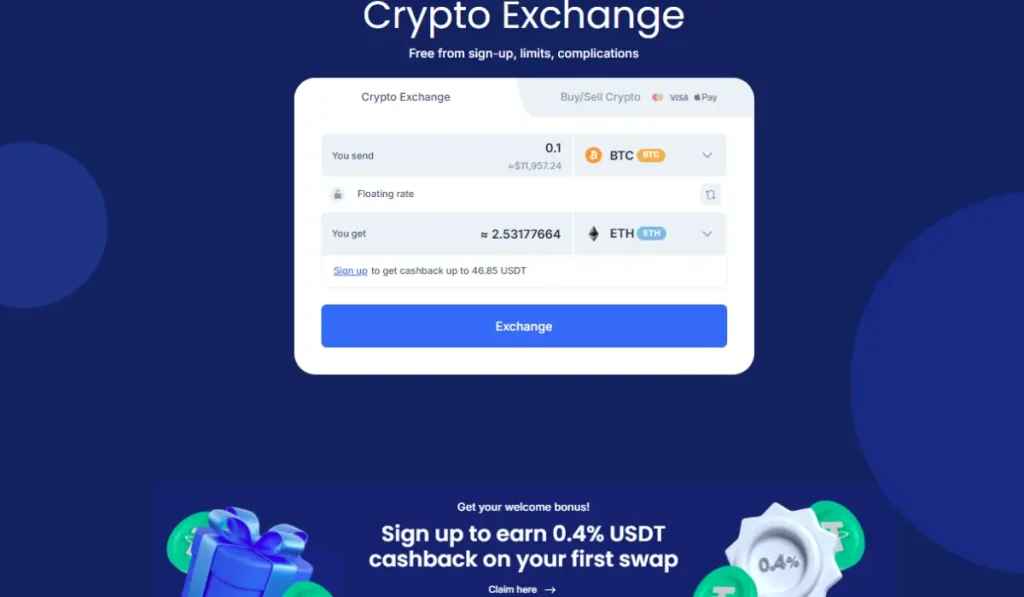
SimpleSwap, a non-custodial swap service, requires no KYC or registration, allowing instant crypto exchanges. Partners may request verification for flagged transactions, and USA users are restricted, with VPN use risking bans. It supports 500+ coins (BTC, ETH, altcoins) for swaps, not trading. Rates are competitive, with loyalty discounts and affiliate rewards. Security is non-custodial, with SSL and reCAPTCHA protection. The no-signup interface is intuitive, with 24/7 support. SimpleSwap’s fixed/floating rate swaps and ease of use are ideal for quick, anonymous exchanges, but USA restrictions and potential AML checks limit its scope.
10. TradeOgre
TradeOgre, a centralized exchange since 2018, skips KYC entirely, requiring no registration and focusing on privacy coins like Monero. There are no withdrawal limits, and it’s accessible globally, including the USA. Supporting 120+ cryptocurrencies, it offers spot trading with a 0.2% fee and no promotions. Security is basic, with 2FA but limited transparency; no major hacks reported. The minimalist interface suits privacy-focused traders but lacks advanced features. TradeOgre’s no-frills, privacy-coin focus appeals to niche users, though its basic security and interface may deter mainstream traders.
Why Choose a No KYC Crypto Exchange?
No KYC exchanges appeal to users for several reasons:
Privacy
No personal data submission reduces risks of breaches or government tracking, aligning with crypto’s anonymous ethos.
Speed
Instant setup via wallets or email skips verification delays, ideal for quick trades.
Limits
Unverified accounts face caps (e.g., 10 BTC/day on MEXC, $20,000/day on Bybit), sufficient for most retail traders. Exceeding limits may trigger KYC.
Risks
Non-KYC platforms may lack consumer protections, increasing scam or fund loss risks. Audited exchanges like Bybit or Uniswap mitigate this.
Compliance Considerations
No KYC exchanges don’t report to authorities, but users must comply with tax laws. Blockchain analytics can trace transactions, and VPN use in restricted regions risks bans.
Are Transactions on No KYC Crypto Exchanges Reportable?
Yes, transactions on no KYC exchanges are taxable in the USA and most jurisdictions. The IRS views crypto as property, taxing capital gains (0-37% short-term, 0-20% long-term) and income from staking or trading. Users must self-report on Forms 1040 and 8949, as no KYC exchanges don’t issue 1099 forms. Blockchain analytics can link wallet activity to identities. Starting 2026, IRS Form 1099-DA may require exchanges, including DEXs, to collect KYC data. Non-compliance risks audits and penalties. Consult a tax professional.
Trade with Confidence: Master Privacy with 2025’s Top No KYC Crypto Exchanges
In 2025, no KYC crypto exchanges like Uniswap, Bybit, and MEXC empower traders with privacy, speed, and diverse assets in a regulated world. From CoinEx’s high limits to TradeOgre’s privacy coin focus, these platforms cater to varied needs, but choosing audited, secure options is critical. USA traders benefit from anonymity but must diligently report taxes to stay compliant. Embrace no KYC exchanges for freedom, but prioritize research, secure wallets, and responsibility to navigate this dynamic crypto landscape successfully.
Top 10 FAQs on No KYC Crypto Exchanges
Below are 10 FAQs addressing trending “People Also Ask” questions:
A platform for trading or swapping crypto without identity verification, using wallets or email.
Audited platforms like Bybit or Uniswap are secure; avoid unverified sites to prevent scams.
Yes, but tax reporting is mandatory; USA restrictions often require VPNs.
Mostly crypto-only; fiat (e.g., Changelly) requires KYC via partners.
Vary—e.g., 10 BTC/day (MEXC), unlimited (Uniswap), $10,000/day (CoinEx).
Yes, via blockchain analytics; self-report gains to avoid penalties.
Yes, e.g., $30,000 on Bybit, airdrops on MEXC.
Uniswap for decentralization and ERC-20 support.
Often for USA access (e.g., Bybit, MEXC); risks account bans if against terms.
For privacy, speed, and crypto’s anonymous ethos, with careful platform selection.